NOTES ON A JOURNEY WITH FEET ON THE GROUND AND EYES LOOKING UP
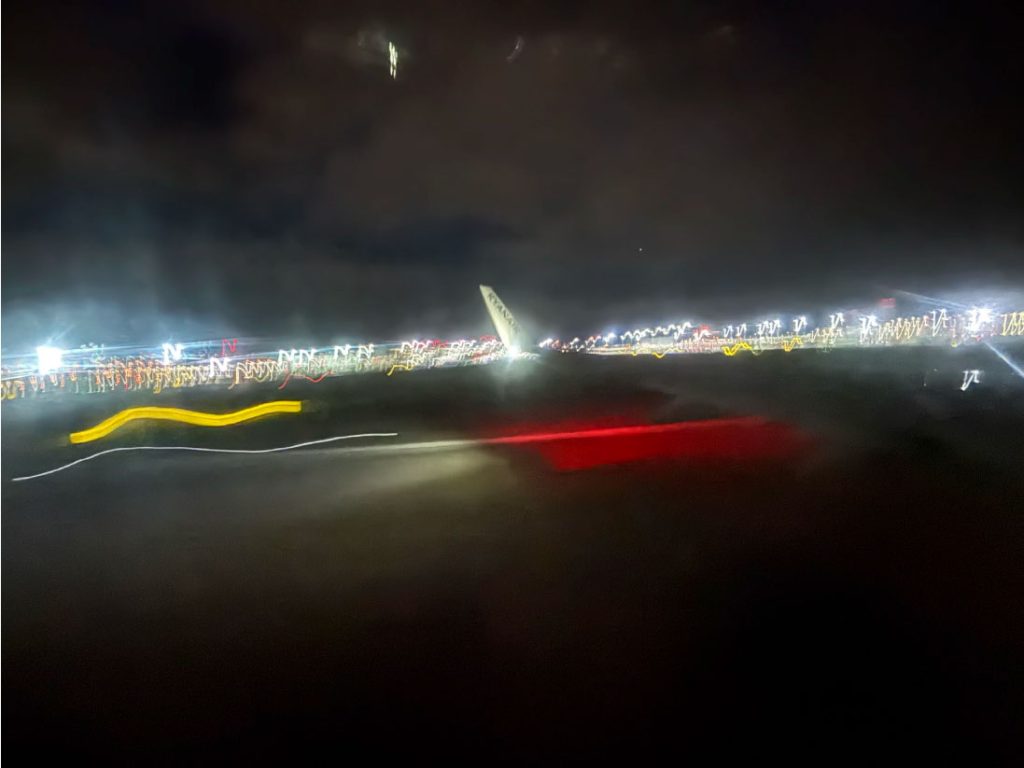
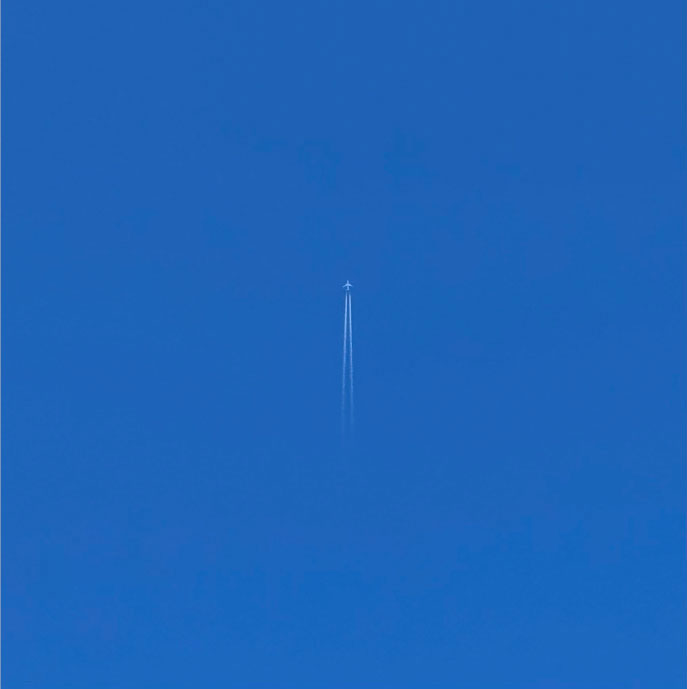
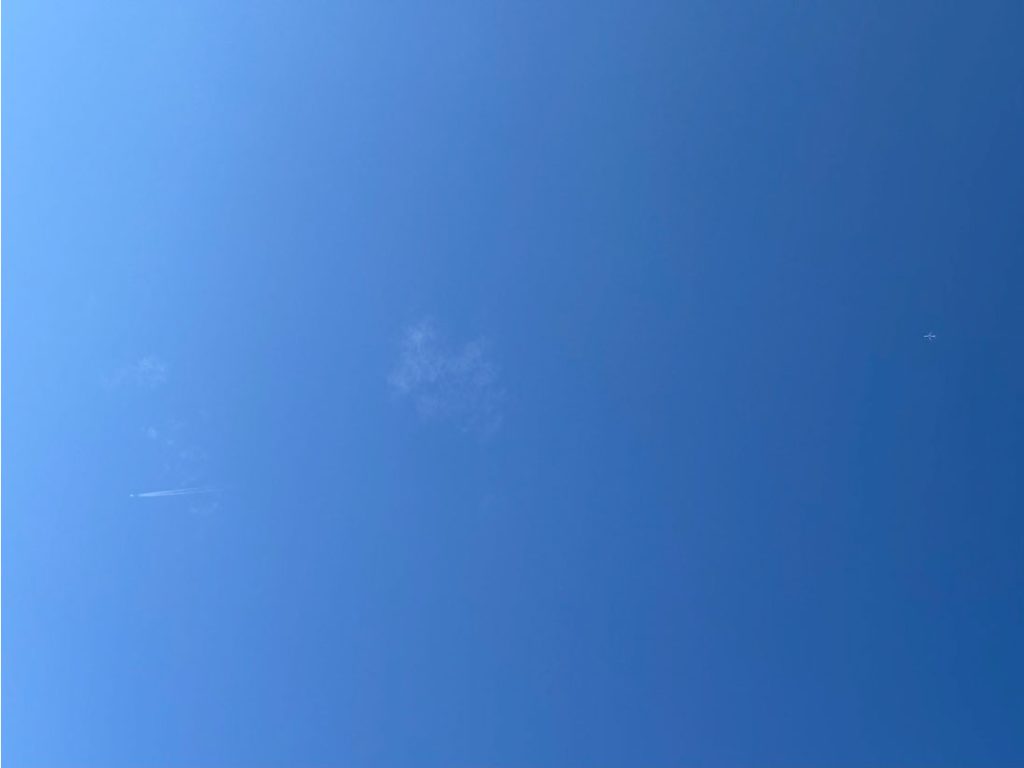
Exactly one month has passed since I set off on my walk along the border. Now I am on a plane about to take off from Venice airport bound for Cagliari. I think back to 25 August, when we met at the agreed meeting point to start our journey on foot.It is a sunny day, the sky is clear, almost completely cloudless. As I wait for the project participants, curious to find out who my travelling companions will be for the next five days, I am amazed at how naturally my gaze is drawn to the sky. I see a plane. And then another. Actually, two. Three planes are simultaneously tracing white lines in the sky above Val Canale. I am almost irritated. The day before, I was shooting a short film for which I needed to capture the image of an aeroplane flying across the sky. I was constantly looking up to see if it was the right moment to point the camera upwards and shoot. In the end, I managed to get the shot I needed, but with difficulty: I had only seen two aeroplanes pass by in one day. Now, however, I see three, all at once. I realise that, although the image of the aeroplane cutting through the blue sky was successfully captured, I have inherited from the previous day's shoot that bias in my gaze, that tendency I had developed to look up.The first person to arrive and also the first person I speak to is Maja. I don't know why, but one of the first things Maja tells me is that she doesn't fly. I tell her that for me this is unthinkable. She is the first person I know who has decided not to fly, not because she is afraid, but as a conscious choice. I find it funny that the first thing Maja said to me was a comment about flying, when just a moment before I was thinking about aeroplanes. I decide to go along with this synchronicity and see where it takes me. I have been asked to write something about this journey, about this slalom between Italy and Austria. So I set myself a mission: to keep looking up and count the number of aeroplanes I see passing by. When you walk, you always look down. Especially in the mountains, it is important to watch where you put your feet. This time, I decide to reverse the trend and look up as much as possible. Who knows, maybe I'll discover something interesting.
The following are excerpts from the notes I kept on my iPhone during the five days of walking between Camporosso and Paularo. For the purposes of this story, it is worth noting that some of these notes were written in Italian, others in English, and the latter have been translated into Italian.
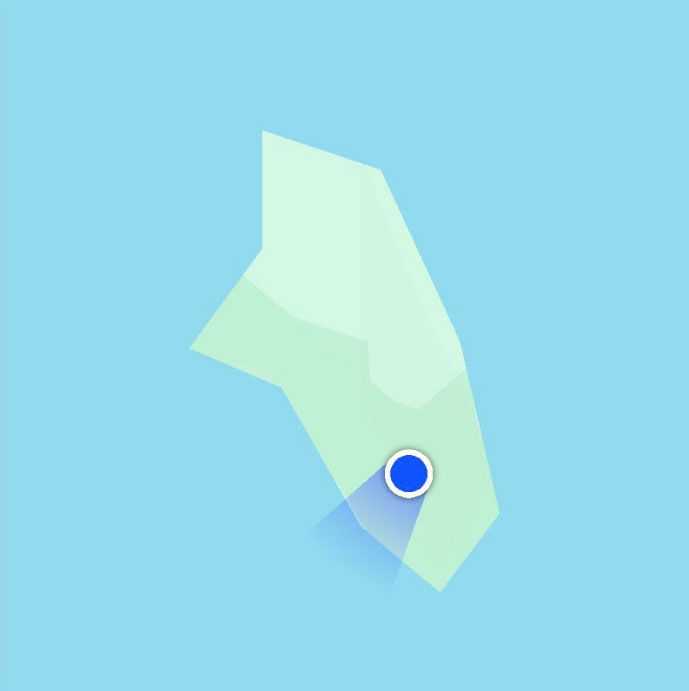
25 September, 11:25 p.m., somewhere above an island in the Mediterranean.
DAY 1, 25 AUGUST
At 8:35 p.m. on the first day, I counted 14 aeroplanes. And to think that I started counting at three in the afternoon. Tomorrow I expect to count at least twice as many.
It is 11:57 p.m. I am writing this note because we were all woken up a little while ago by the mountain rescue service. They are looking for a girl who has gone missing. They saw our tents camped near a refuge and wanted to make sure she was not with us. I am finding it difficult to get back to sleep because I am thinking about the girl. I hope she is not spending the night outside in the cold. I try to fall asleep, but without success. Sleeping on the ground in a tent is never comfortable. What's more, the roar of aeroplanes in the sky is almost constant, a sort of low frequency that acts as a backdrop to the soundscape of the mountains at night. I wonder if I should also count the aeroplanes I hear, not just the ones I see. I need to have clear rules, that's for sure. No, only the ones I see. I can hear one right now. I could go outside the tent, which would increase today's aeroplane count. In fact, as it's now past midnight, this one would count as the first one tomorrow. But I'm too lazy to go outside.
DAY 2, 26 AUGUST
Another cloudless day. But we are walking mostly in the woods. I am frustrated because I can hear the sound of aeroplanes, but the view is almost completely covered by trees.
Once out of the woods, the view now encompasses almost the entire sky. And then I see two aeroplanes, flying in the same direction, seemingly at a similar altitude, two two-dimensional white shapes crossing a blue surface. Yet one leaves a white trail behind it, the other none. I wonder why. There is no internet connection here, so I have no way of checking. Perhaps it is better this way, that this little mystery remains unsolved for now.
At 9:38 p.m. today, I saw 17 aeroplanes and 1 glider. The glider was an unexpected surprise. The 17 aeroplanes were a disappointment. Yesterday, I counted almost as many, but in a third of the time. Today, I would have expected to exceed 30.
DAY 3, 27 AUGUST
I have never understood or felt any fascination with bird watching. Spending time looking for birds to identify their species and jot them down in a notebook. As if seeing a bird hundreds of metres away through the lenses of binoculars were somehow equivalent to having captured it. Although I empathise less with those who capture birds, at least I understand them better: a caged bird belongs to me more than the memory of a sighting.I have never understood collectors either, too preoccupied with the act of hoarding things. But now that I find myself counting aeroplanes, how am I any different from a birdwatcher or a collector? Isn't counting aeroplanes collecting perceptions?The images of aeroplanes imprinted on my retina during these days of looking up now exist only in my memory. That these perceptions belong to me is only an illusion.
As with all things, the more time you devote to it, the better you become. After two days of looking up, I have grasped some of the fundamentals of aeroplane watching. First of all, when your attention is aroused by the distant roar of an aeroplane, it is useless to look in the direction from which the sound is coming. Estimating that an aeroplane travels at a speed of 800/900 km/h and is at an altitude of 8000 m, considering that the speed of sound is about 300 m/s, the aeroplane should be sought at an angle of at least 40 degrees from the point of origin of the perceived sound. But it is not enough to prick up your ears and look up only after recognising the sound: you could miss the chance to spot an aeroplane. In fact, sometimes an aeroplane, even though it looks surprisingly close, may not make any sound (and I am not just referring to gliders). The reason for this remains a mystery to me. But the easiest way to identify aeroplanes is simply by the contrails they leave behind. Finding a white mark on the blue sky and then tracing it back to the aeroplane is an easy task. However, recognising an aeroplane's contrail is not enough to count it among those seen: I happened to see the classic white contrail in a narrow blue space between the white clouds, but the aeroplane was already behind the clouds, so I did not have time to see its outline: it is necessary to see the aeroplane itself in order to be able to say that you have seen it. However, the most satisfying sightings are still those of aeroplanes that leave no contrails and make no noise.
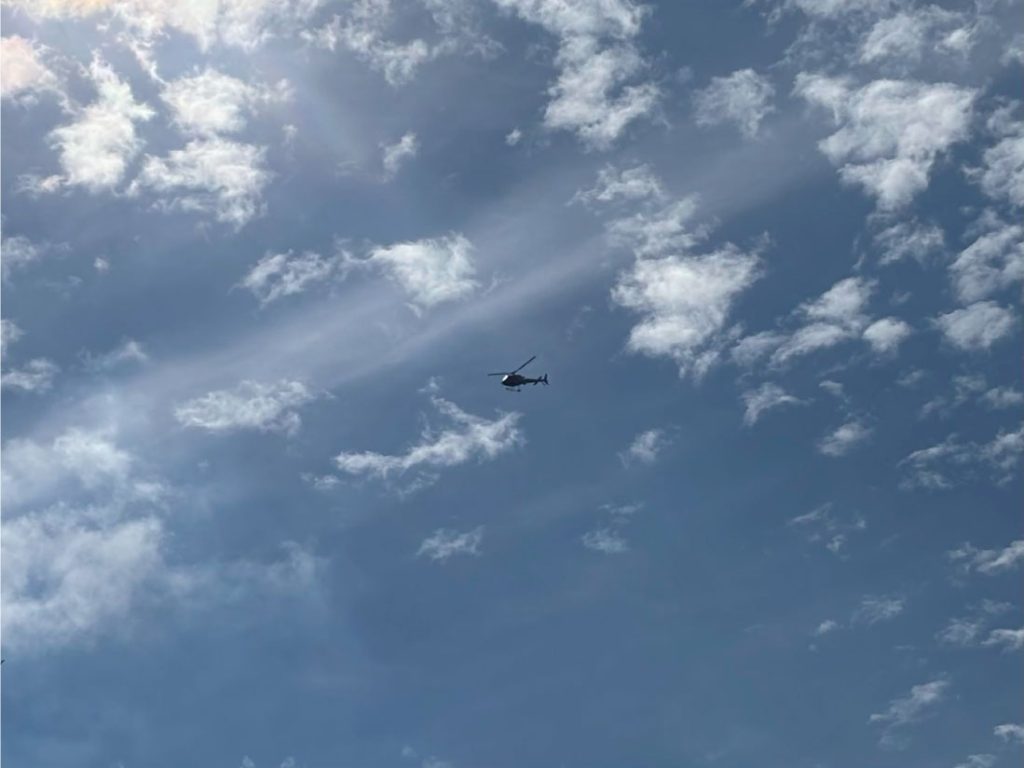
Today I saw 38 aeroplanes and 1 helicopter.
DAY 4, 28 AUGUST
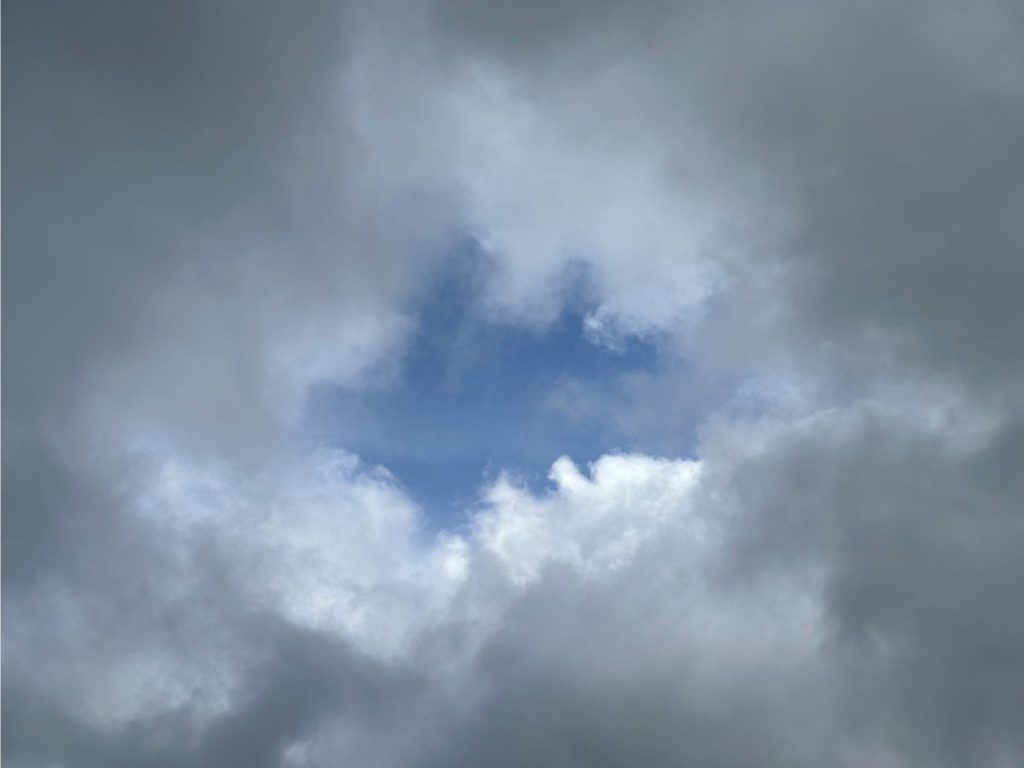
I am the first to wake up this morning. It rained last night and it is still raining now. The sky is completely overcast. I do not expect to see any aeroplanes today. I just nearly fell over, for the second time this morning. Walking while looking up is a complicated art. It's like standing on one leg with your eyes closed. There are no reference points in the sky to focus your gaze on. So, without the visual component, proprioception is severely compromised. Our sense of balance is fragile. I'd better be more careful.Leo is walking in front of me. I'm looking up and I see a small hawk. Leo exclaims, “A peregrine falcon!”. I tell him I'm surprised he saw it, because it was right above his head. He tells me he looked up because he saw the falcon's shadow crossing his path. For a second, I wonder if looking for shadows on the ground to find their source in the sky could be a new technique for finding aeroplanes. But I immediately realise that no, it's impossible, they're too far away to cast a shadow down here.As I walk, thoughts constantly cross my mind. Sometimes I find these thoughts valuable enough to write them down here in my phone notes. I do it spontaneously and try to write them down immediately in the way they arose. Sometimes I write in Italian, sometimes in English. In fact, the thoughts that cross my mind are in one language or the other. I am surprised by this, but it is not so surprising: these days of walking, I always bounce between one language and another. When I talk to Janine and Opher, who are fluent in both languages, the conversation jumps unpredictably between one language and another. I am not sure what cognitive processes underlie this continuous linguistic transition. I think of what Sabrina shared last night, “we're a walking border on a border”. That's exactly right.This evening, everyone shared their ideas. I recounted, with some embarrassment, the task I had set myself for this walk. Margot said, “Ah, is that why you were always looking up?”. I swear I didn't think anyone had noticed.This morning, I had resigned myself to not seeing any aeroplanes because of the bad weather. But for a few brief moments, precarious patches of blue opened up in today's leaden sky. That's when I saw nine aeroplanes fly by.
DAY 5, 29 AUGUST
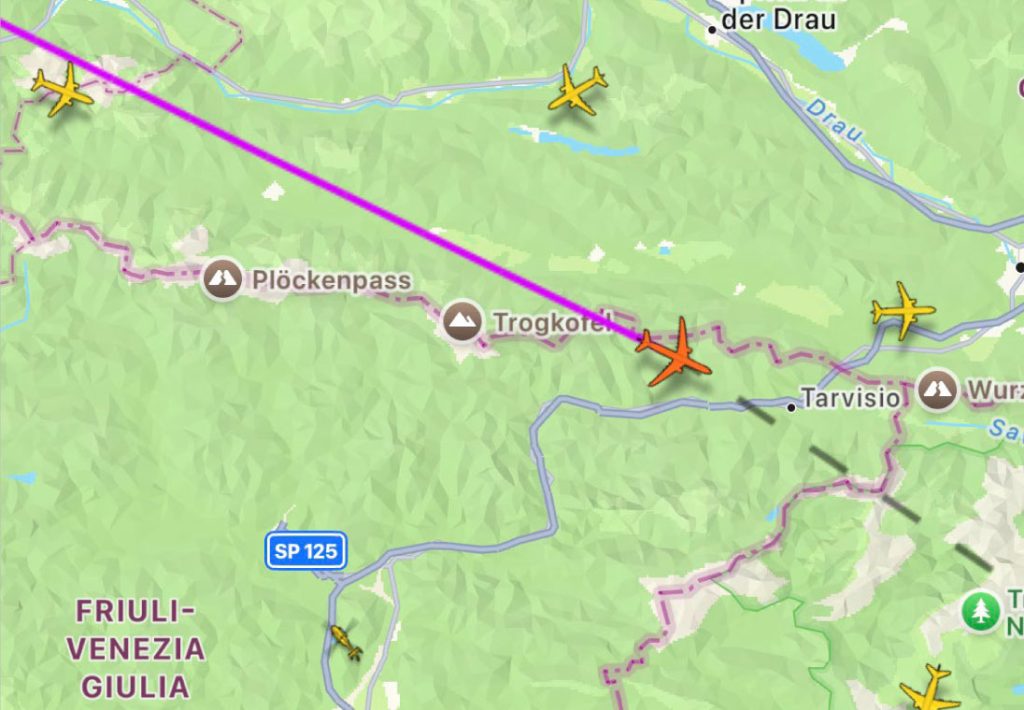
My obsession with counting aeroplanes haunts me even at night. Last night I dreamt that I suddenly counted 37 aeroplanes in the sky. The sky was full of them. Some were flying very low. Others were white capsules floating slowly, carrying endangered plants to Northern Europe.Today is the last day of walking and the sky is cloudier than yesterday. My plane count will probably stop here. But last night at the hotel, for the first time with internet access, I downloaded Flight Radar onto my phone, the app that tracks all aircraft currently flying around the world: if I hear the noise, at least I'll know which flight it is.Walking inside a cloud at an altitude of over two thousand metres, I ask Leo if we are in Austria or Italy. He replies that we are on the border. An evasive answer. The fog all around confuses even our guide. We have no points of reference. We don't know for sure where we are. I hear the sound, the low frequencies of a distant aeroplane. By now, out of Pavlovian reflex, I immediately look up, but I am confronted with reality: visibility is no more than ten metres in any direction. There is no question of seeing aeroplanes. I take out my phone and am surprised to find that, at one of the highest points of the entire journey, the internet connection is excellent. So I consult Flight Radar. I discover that the sound of the aeroplane I hear is from a flight passing practically overhead. Origin: Boston. Destination: Tel Aviv. Above us, about three hundred passengers are crossing the border. One of them is probably looking out of the window above a sea of clouds. Without any points of reference, they have no idea where they are. And it doesn't even cross their mind that they are crossing some kind of border. We, who are below those clouds – or more accurately, inside those clouds – are not in such a different situation.Our journey ends at Malga Cason di Lanza. Today, I really haven't seen any aeroplanes. Huddled around a table while it pours with rain outside, we discuss our ideas about borders. A story by Opher awakens a memory in me. Suddenly, I remember the time when, returning from a trip to Turkey, I went to say hello to a shepherd friend of mine in the mountain pastures. He asked me how I had got to Turkey. I explained that I had flown there. The shepherd then wanted to know how many people were on the aeroplane. A little taken aback by the question, I replied, “Well, I don't know, two or three hundred, I think”. He looked at me in shock and said, “Two hundred people?! A whole country!”. I hadn't considered the worldview of someone who lives in a village of forty inhabitants. Each of us perceives reality through our own paradigms. It's easy to forget that other people's paradigms can be completely different from ours. The occasions when we have the opportunity to observe this generate amazement.Marta asked me how many aeroplanes I had counted during these five days of walking. I told her I had counted 78. “If you counted 78 aeroplanes and an aeroplane has an average of 200/300 people, then that means at least 20,000 people have passed over us.” I am impressed by this fact. It had not even crossed my mind to calculate this figure. Perhaps another fact not anticipated by my paradigm. Marta, who has a degree in mathematics, immediately thought of the numbers.I think that if I counted 78 aeroplanes, the number of aeroplanes that actually flew over us is much higher, considering that I only heard many of them, just as many must have escaped my attention, and at night I couldn't count them except in my dreams. To say that 500 aeroplanes flew over us would still be an underestimate. But let's pretend that's the case. That would mean that over 100,000 people flew over us. I don't know what that means. But I like to think that in a five-day window in late August, an entire city whizzed through the skies of two lands that touch each other. Meanwhile, several kilometres below, fourteen people walked the paths of an uncertain border.
NOTES ON A JOURNEY WITH FEET ON THE GROUND AND EYES LOOKING UP
Exactly one month has passed since I set off on my walk along the border. Now I am on a plane about to take off from Venice airport bound for Cagliari. I think back to 25 August, when we met at the agreed meeting point to start our journey on foot.It is a sunny day, the sky is clear, almost completely cloudless. As I wait for the project participants, curious to find out who my travelling companions will be for the next five days, I am amazed at how naturally my gaze is drawn to the sky. I see a plane. And then another. Actually, two. Three planes are simultaneously tracing white lines in the sky above Val Canale. I am almost irritated. The day before, I was shooting a short film for which I needed to capture the image of an aeroplane flying across the sky. I was constantly looking up to see if it was the right moment to point the camera upwards and shoot. In the end, I managed to get the shot I needed, but with difficulty: I had only seen two aeroplanes pass by in one day. Now, however, I see three, all at once. I realise that, although the image of the aeroplane cutting through the blue sky was successfully captured, I have inherited from the previous day's shoot that bias in my gaze, that tendency I had developed to look up.The first person to arrive and also the first person I speak to is Maja. I don't know why, but one of the first things Maja tells me is that she doesn't fly. I tell her that for me this is unthinkable. She is the first person I know who has decided not to fly, not because she is afraid, but as a conscious choice. I find it funny that the first thing Maja said to me was a comment about flying, when just a moment before I was thinking about aeroplanes. I decide to go along with this synchronicity and see where it takes me. I have been asked to write something about this journey, about this slalom between Italy and Austria. So I set myself a mission: to keep looking up and count the number of aeroplanes I see passing by. When you walk, you always look down. Especially in the mountains, it is important to watch where you put your feet. This time, I decide to reverse the trend and look up as much as possible. Who knows, maybe I'll discover something interesting.
The following are excerpts from the notes I kept on my iPhone during the five days of walking between Camporosso and Paularo. For the purposes of this story, it is worth noting that some of these notes were written in Italian, others in English, and the latter have been translated into Italian.
25 September, 11:25 p.m., somewhere above an island in the Mediterranean.
DAY 1, 25 AUGUST
At 8:35 p.m. on the first day, I counted 14 aeroplanes. And to think that I started counting at three in the afternoon. Tomorrow I expect to count at least twice as many.
It is 11:57 p.m. I am writing this note because we were all woken up a little while ago by the mountain rescue service. They are looking for a girl who has gone missing. They saw our tents camped near a refuge and wanted to make sure she was not with us. I am finding it difficult to get back to sleep because I am thinking about the girl. I hope she is not spending the night outside in the cold. I try to fall asleep, but without success. Sleeping on the ground in a tent is never comfortable. What's more, the roar of aeroplanes in the sky is almost constant, a sort of low frequency that acts as a backdrop to the soundscape of the mountains at night. I wonder if I should also count the aeroplanes I hear, not just the ones I see. I need to have clear rules, that's for sure. No, only the ones I see. I can hear one right now. I could go outside the tent, which would increase today's aeroplane count. In fact, as it's now past midnight, this one would count as the first one tomorrow. But I'm too lazy to go outside.
DAY 2, 26 AUGUST
Another cloudless day. But we are walking mostly in the woods. I am frustrated because I can hear the sound of aeroplanes, but the view is almost completely covered by trees.
Once out of the woods, the view now encompasses almost the entire sky. And then I see two aeroplanes, flying in the same direction, seemingly at a similar altitude, two two-dimensional white shapes crossing a blue surface. Yet one leaves a white trail behind it, the other none. I wonder why. There is no internet connection here, so I have no way of checking. Perhaps it is better this way, that this little mystery remains unsolved for now.
At 9:38 p.m. today, I saw 17 aeroplanes and 1 glider. The glider was an unexpected surprise. The 17 aeroplanes were a disappointment. Yesterday, I counted almost as many, but in a third of the time. Today, I would have expected to exceed 30.
DAY 3, 27 AUGUST
I have never understood or felt any fascination with bird watching. Spending time looking for birds to identify their species and jot them down in a notebook. As if seeing a bird hundreds of metres away through the lenses of binoculars were somehow equivalent to having captured it. Although I empathise less with those who capture birds, at least I understand them better: a caged bird belongs to me more than the memory of a sighting.I have never understood collectors either, too preoccupied with the act of hoarding things. But now that I find myself counting aeroplanes, how am I any different from a birdwatcher or a collector? Isn't counting aeroplanes collecting perceptions?The images of aeroplanes imprinted on my retina during these days of looking up now exist only in my memory. That these perceptions belong to me is only an illusion.
As with all things, the more time you devote to it, the better you become. After two days of looking up, I have grasped some of the fundamentals of aeroplane watching. First of all, when your attention is aroused by the distant roar of an aeroplane, it is useless to look in the direction from which the sound is coming. Estimating that an aeroplane travels at a speed of 800/900 km/h and is at an altitude of 8000 m, considering that the speed of sound is about 300 m/s, the aeroplane should be sought at an angle of at least 40 degrees from the point of origin of the perceived sound. But it is not enough to prick up your ears and look up only after recognising the sound: you could miss the chance to spot an aeroplane. In fact, sometimes an aeroplane, even though it looks surprisingly close, may not make any sound (and I am not just referring to gliders). The reason for this remains a mystery to me. But the easiest way to identify aeroplanes is simply by the contrails they leave behind. Finding a white mark on the blue sky and then tracing it back to the aeroplane is an easy task. However, recognising an aeroplane's contrail is not enough to count it among those seen: I happened to see the classic white contrail in a narrow blue space between the white clouds, but the aeroplane was already behind the clouds, so I did not have time to see its outline: it is necessary to see the aeroplane itself in order to be able to say that you have seen it. However, the most satisfying sightings are still those of aeroplanes that leave no contrails and make no noise.
Today I saw 38 aeroplanes and 1 helicopter.
DAY 4, 28 AUGUST
I am the first to wake up this morning. It rained last night and it is still raining now. The sky is completely overcast. I do not expect to see any aeroplanes today. I just nearly fell over, for the second time this morning. Walking while looking up is a complicated art. It's like standing on one leg with your eyes closed. There are no reference points in the sky to focus your gaze on. So, without the visual component, proprioception is severely compromised. Our sense of balance is fragile. I'd better be more careful.Leo is walking in front of me. I'm looking up and I see a small hawk. Leo exclaims, “A peregrine falcon!”. I tell him I'm surprised he saw it, because it was right above his head. He tells me he looked up because he saw the falcon's shadow crossing his path. For a second, I wonder if looking for shadows on the ground to find their source in the sky could be a new technique for finding aeroplanes. But I immediately realise that no, it's impossible, they're too far away to cast a shadow down here.As I walk, thoughts constantly cross my mind. Sometimes I find these thoughts valuable enough to write them down here in my phone notes. I do it spontaneously and try to write them down immediately in the way they arose. Sometimes I write in Italian, sometimes in English. In fact, the thoughts that cross my mind are in one language or the other. I am surprised by this, but it is not so surprising: these days of walking, I always bounce between one language and another. When I talk to Janine and Opher, who are fluent in both languages, the conversation jumps unpredictably between one language and another. I am not sure what cognitive processes underlie this continuous linguistic transition. I think of what Sabrina shared last night, “we're a walking border on a border”. That's exactly right.This evening, everyone shared their ideas. I recounted, with some embarrassment, the task I had set myself for this walk. Margot said, “Ah, is that why you were always looking up?”. I swear I didn't think anyone had noticed.This morning, I had resigned myself to not seeing any aeroplanes because of the bad weather. But for a few brief moments, precarious patches of blue opened up in today's leaden sky. That's when I saw nine aeroplanes fly by.
DAY 5, 29 AUGUST
My obsession with counting aeroplanes haunts me even at night. Last night I dreamt that I suddenly counted 37 aeroplanes in the sky. The sky was full of them. Some were flying very low. Others were white capsules floating slowly, carrying endangered plants to Northern Europe.Today is the last day of walking and the sky is cloudier than yesterday. My plane count will probably stop here. But last night at the hotel, for the first time with internet access, I downloaded Flight Radar onto my phone, the app that tracks all aircraft currently flying around the world: if I hear the noise, at least I'll know which flight it is.Walking inside a cloud at an altitude of over two thousand metres, I ask Leo if we are in Austria or Italy. He replies that we are on the border. An evasive answer. The fog all around confuses even our guide. We have no points of reference. We don't know for sure where we are. I hear the sound, the low frequencies of a distant aeroplane. By now, out of Pavlovian reflex, I immediately look up, but I am confronted with reality: visibility is no more than ten metres in any direction. There is no question of seeing aeroplanes. I take out my phone and am surprised to find that, at one of the highest points of the entire journey, the internet connection is excellent. So I consult Flight Radar. I discover that the sound of the aeroplane I hear is from a flight passing practically overhead. Origin: Boston. Destination: Tel Aviv. Above us, about three hundred passengers are crossing the border. One of them is probably looking out of the window above a sea of clouds. Without any points of reference, they have no idea where they are. And it doesn't even cross their mind that they are crossing some kind of border. We, who are below those clouds – or more accurately, inside those clouds – are not in such a different situation.Our journey ends at Malga Cason di Lanza. Today, I really haven't seen any aeroplanes. Huddled around a table while it pours with rain outside, we discuss our ideas about borders. A story by Opher awakens a memory in me. Suddenly, I remember the time when, returning from a trip to Turkey, I went to say hello to a shepherd friend of mine in the mountain pastures. He asked me how I had got to Turkey. I explained that I had flown there. The shepherd then wanted to know how many people were on the aeroplane. A little taken aback by the question, I replied, “Well, I don't know, two or three hundred, I think”. He looked at me in shock and said, “Two hundred people?! A whole country!”. I hadn't considered the worldview of someone who lives in a village of forty inhabitants. Each of us perceives reality through our own paradigms. It's easy to forget that other people's paradigms can be completely different from ours. The occasions when we have the opportunity to observe this generate amazement.Marta asked me how many aeroplanes I had counted during these five days of walking. I told her I had counted 78. “If you counted 78 aeroplanes and an aeroplane has an average of 200/300 people, then that means at least 20,000 people have passed over us.” I am impressed by this fact. It had not even crossed my mind to calculate this figure. Perhaps another fact not anticipated by my paradigm. Marta, who has a degree in mathematics, immediately thought of the numbers.I think that if I counted 78 aeroplanes, the number of aeroplanes that actually flew over us is much higher, considering that I only heard many of them, just as many must have escaped my attention, and at night I couldn't count them except in my dreams. To say that 500 aeroplanes flew over us would still be an underestimate. But let's pretend that's the case. That would mean that over 100,000 people flew over us. I don't know what that means. But I like to think that in a five-day window in late August, an entire city whizzed through the skies of two lands that touch each other. Meanwhile, several kilometres below, fourteen people walked the paths of an uncertain border.