VISIBILE / INVISIBILE
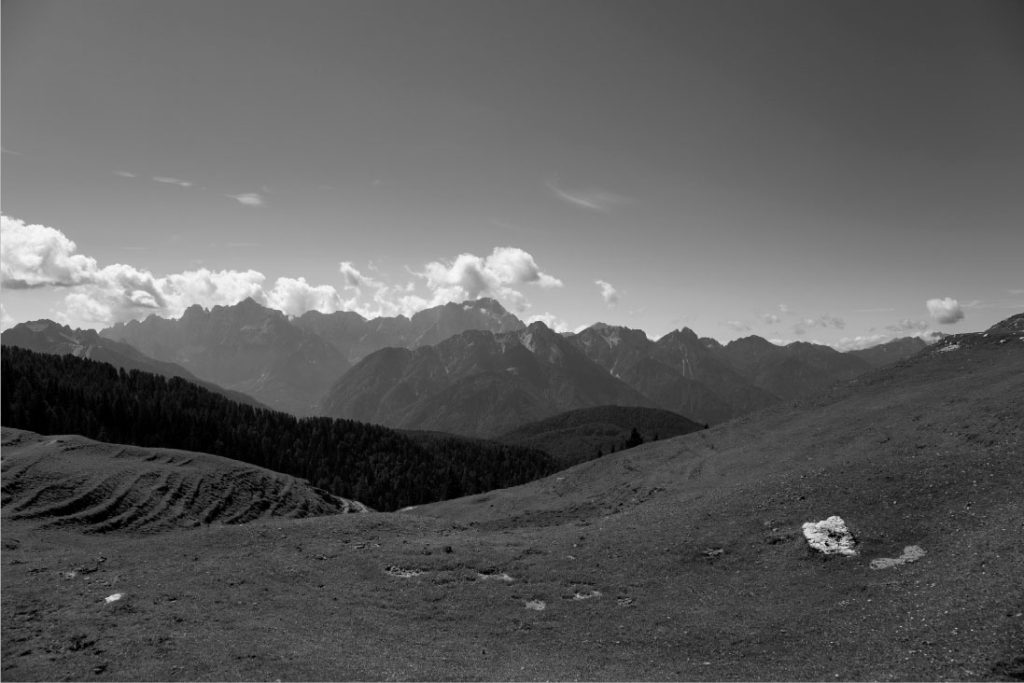
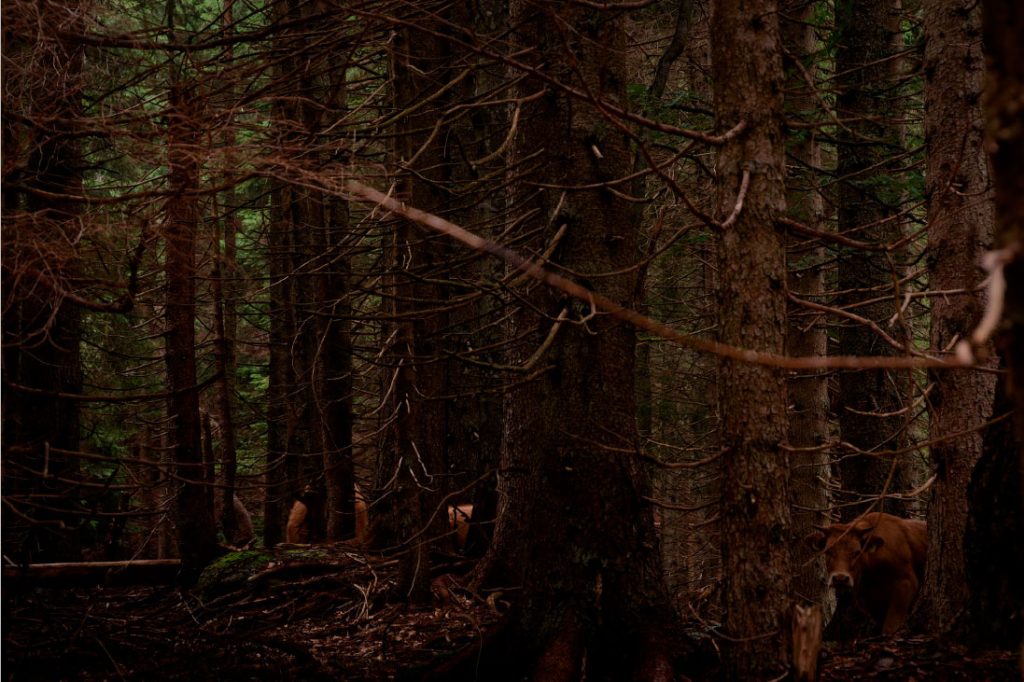
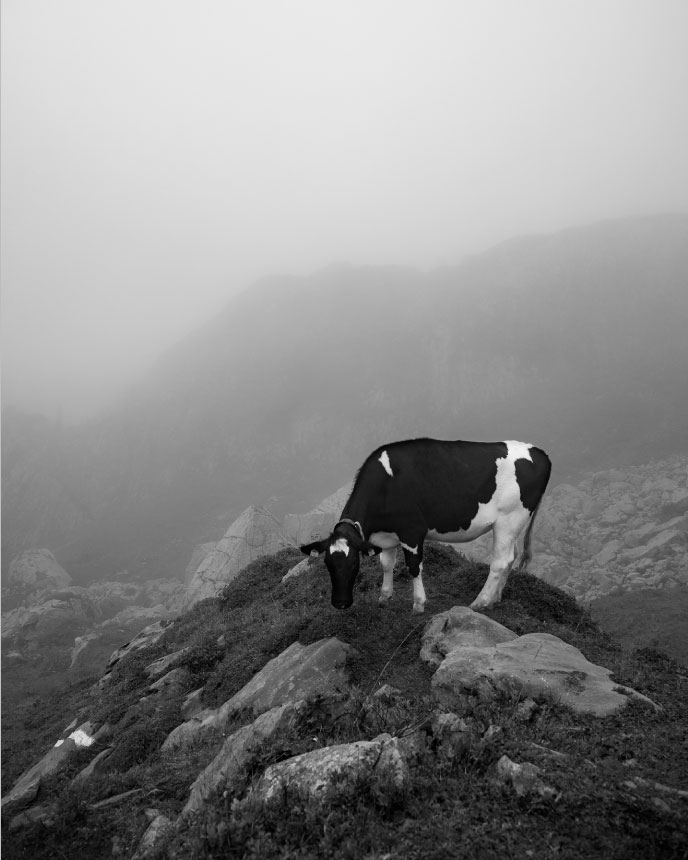
The line is there, defined by rectangular markers placed at regular intervals. Their presence is incongruous amid the scree, marmot burrows and black pines. Surrounded by greenery, the white markers adorned with black letters stand out. They are the humble representatives of this human trait, marking out like property boundaries between neighbours what is “ours” and what is “foreign”. At first glance, they are the only signs of human presence. Then, we notice the rows of trees, and we see that they are all of the same species, the kind used to produce wood for making straight planks. Then, between the trees, we first hear, then distinguish, the hoarse breathing and the dull pounding of the hooves of cows grazing among the trees. The dampness of the riverbanks makes us shiver, while the water is channelled into underground pipes that leave the track dry for us to walk on.
Crossing the untamed rivers proves more difficult than crossing the border. One has to jump from stone to stone, left there by some previous walker.
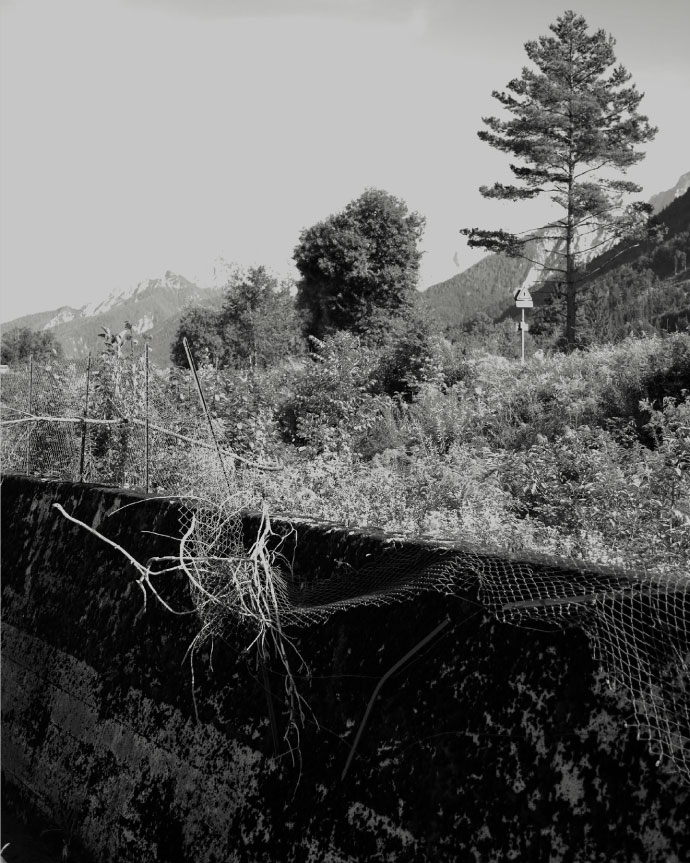
It is only when you walk on it that you realize how inhabited this border is, how its surroundings are shaped by a subtle interweaving of human activity and untamed life.
This border is visible only to us. Eagles hunt marmots above, horses follow the fattest grass, the wind and clouds pass from one mountain to another, ignoring the line drawn on the map more than a century ago. But they are not the only ones to cross it.
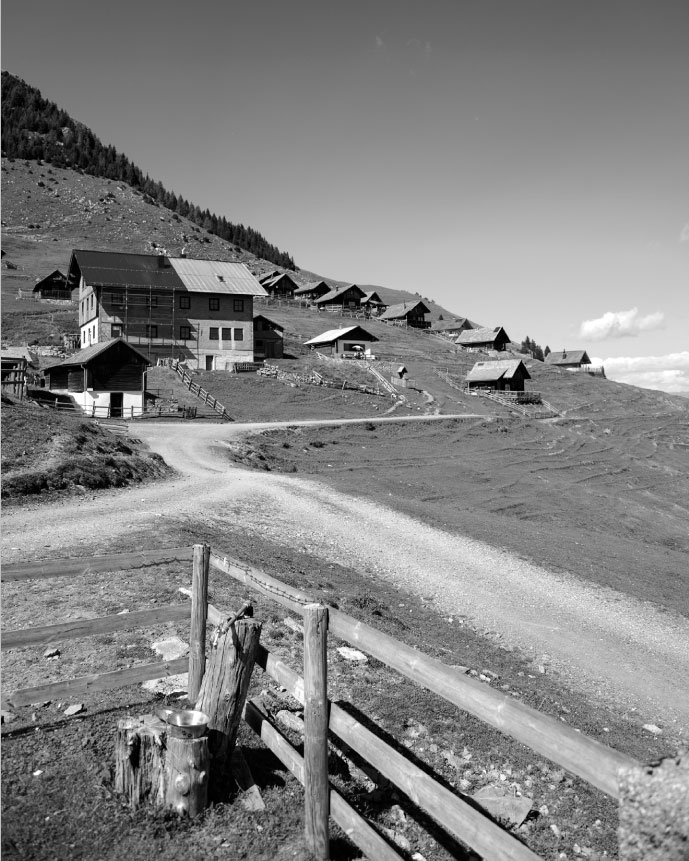
The radio, materialized by its waves, carries music from one country to another. In one Alm on the Austrian side, the radio is playing folk songs from the region. This lends the place an air of authenticity. This Alm, in the middle of a tiny Austrian village on the border, places us completely in German-speaking territory: wooden houses, Austrian dialect, Knödelsuppe and traditional music. The only Slovenian speaker in our group suddenly starts humming along to the music: one of the songs on air is a traditional Slovenian ballad. Suddenly, the Alm shifts, and we shift with it. From a homogeneous place, it turns into something in between. The wooden house suddenly stands on a line that becomes visible. These radio waves turn it into a space of resistance because they suddenly make everything complex. Immediately, the Slovenian language reveals the presence of Slovenian-speaking families in the Alm. We hear their lingering presence, like the whispers of ghosts, breaking the manufactured homogeneity. Entire villages of Slavic and mixed cultures (because nothing is simple) forced to assimilate into a dominant German-speaking culture due to the abstract drawing of the border join us.
When travelling through these inhabited areas, one feels as though one is putting up a small resistance. We abandon homogeneity and simplicity for the complexity of stories as we pass through these spaces of multiple transitions. Nature is not completely wild, languages and cultures sometimes have nothing to do with an abstract line, like eagles and horses. What if resistance meant taking an interest in what we want to make invisible? Or losing interest in the dominant patterns instilled by nations that want to be all-powerful? Becoming indifferent to them (just like people who lived here in the past)? It is only through their demarcations that they are able to exist.
VISIBILE / INVISIBILE
The line is there, defined by rectangular markers placed at regular intervals. Their presence is incongruous amid the scree, marmot burrows and black pines. Surrounded by greenery, the white markers adorned with black letters stand out. They are the humble representatives of this human trait, marking out like property boundaries between neighbours what is “ours” and what is “foreign”. At first glance, they are the only signs of human presence. Then, we notice the rows of trees, and we see that they are all of the same species, the kind used to produce wood for making straight planks. Then, between the trees, we first hear, then distinguish, the hoarse breathing and the dull pounding of the hooves of cows grazing among the trees. The dampness of the riverbanks makes us shiver, while the water is channelled into underground pipes that leave the track dry for us to walk on.
Crossing the untamed rivers proves more difficult than crossing the border. One has to jump from stone to stone, left there by some previous walker.
It is only when you walk on it that you realize how inhabited this border is, how its surroundings are shaped by a subtle interweaving of human activity and untamed life.
This border is visible only to us. Eagles hunt marmots above, horses follow the fattest grass, the wind and clouds pass from one mountain to another, ignoring the line drawn on the map more than a century ago. But they are not the only ones to cross it.
The radio, materialized by its waves, carries music from one country to another. In one Alm on the Austrian side, the radio is playing folk songs from the region. This lends the place an air of authenticity. This Alm, in the middle of a tiny Austrian village on the border, places us completely in German-speaking territory: wooden houses, Austrian dialect, Knödelsuppe and traditional music. The only Slovenian speaker in our group suddenly starts humming along to the music: one of the songs on air is a traditional Slovenian ballad. Suddenly, the Alm shifts, and we shift with it. From a homogeneous place, it turns into something in between. The wooden house suddenly stands on a line that becomes visible. These radio waves turn it into a space of resistance because they suddenly make everything complex. Immediately, the Slovenian language reveals the presence of Slovenian-speaking families in the Alm. We hear their lingering presence, like the whispers of ghosts, breaking the manufactured homogeneity. Entire villages of Slavic and mixed cultures (because nothing is simple) forced to assimilate into a dominant German-speaking culture due to the abstract drawing of the border join us.
When travelling through these inhabited areas, one feels as though one is putting up a small resistance. We abandon homogeneity and simplicity for the complexity of stories as we pass through these spaces of multiple transitions. Nature is not completely wild, languages and cultures sometimes have nothing to do with an abstract line, like eagles and horses. What if resistance meant taking an interest in what we want to make invisible? Or losing interest in the dominant patterns instilled by nations that want to be all-powerful? Becoming indifferent to them (just like people who lived here in the past)? It is only through their demarcations that they are able to exist.